

Ground Fault Circuit Interrupter — GFCI — outlets are one of the most important electrical safety features in any home. Yet many older GTA homes, particularly those built before the late 1980s, either don’t have them in the locations where they’re now required, have older units that may no longer be functioning correctly, or have homeowners who don’t fully understand what GFCI protection does and why it matters.
Here’s a complete guide to GFCI outlets in Ontario homes: how they work, where they’re required, and why upgrading your home’s GFCI protection is one of the most important electrical safety investments you can make.
How GFCI Outlets Work
A standard electrical outlet delivers current in a controlled loop — power flows out through the hot wire to your device and returns through the neutral wire. A ground fault occurs when current escapes this controlled loop and finds an unintended path to ground — for example, through a person who is in contact with both an energised surface and a ground path such as a wet floor.
A GFCI outlet monitors the current flowing out through the hot wire and returning through the neutral wire. When it detects an imbalance as small as 5 milliamps — an amount that is far too small to trip a standard circuit breaker but large enough to cause a dangerous or fatal shock — it cuts power to the outlet within 1/40th of a second. This response time is fast enough to prevent electrocution in most scenarios.
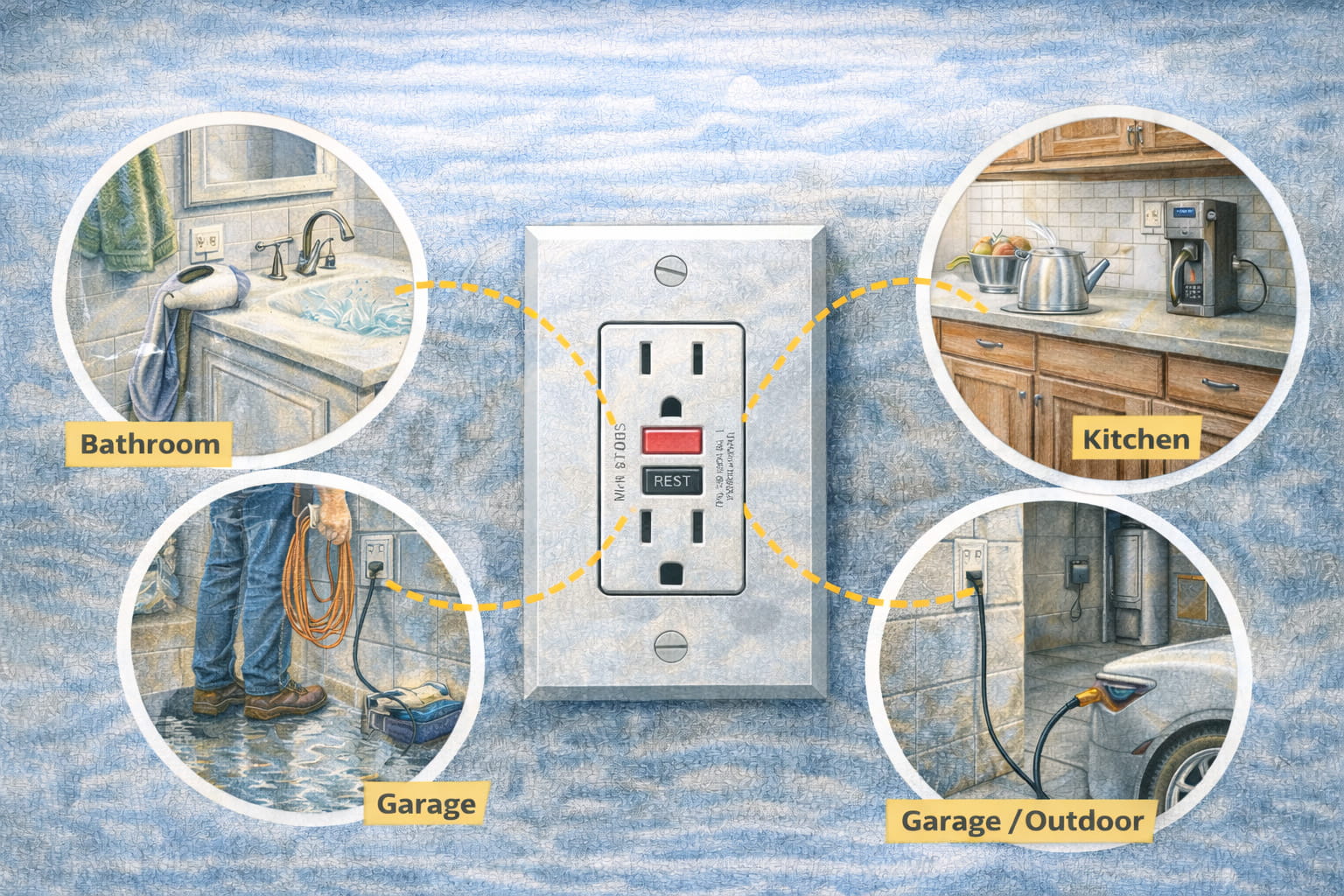
The recognizable feature of a GFCI outlet is the two small buttons in the center — TEST and RESET. The TEST button trips the outlet to confirm it’s working; RESET restores power after a trip.
Where GFCI Protection Is Required in Ontario
Ontario’s Electrical Safety Code requires GFCI protection in specific locations where the combination of electricity and water creates elevated shock risk. Current requirements include:
- All bathroom outlets
- All kitchen outlets within 1.5 metres of a sink
- All garage outlets
- All outdoor outlets
- All outlets in unfinished basements
- All outlets within 1.5 metres of any wet bar, laundry tub, or swimming pool
These requirements apply to new construction and renovation work. Existing outlets in older homes are technically grandfathered under the code in place when they were installed — but that legal technicality doesn’t change the physical risk that unprotected outlets in these locations present.
Why Older GTA Homes Need Upgrades
Many GTA homes built before the late 1980s have standard outlets in locations where GFCI protection is now required. Even homes that do have GFCI outlets in the right locations may have units that are 20 or 30 years old — GFCI outlets have a recommended service life of approximately 10 years, and older units can fail silently, appearing to work normally but no longer providing ground fault protection.
Testing is simple: press the TEST button. If the outlet loses power and the RESET button pops out, the unit is functioning. If pressing TEST doesn’t kill power to the outlet, the GFCI mechanism has failed and the outlet needs replacement.
GFCI Protection and Aging in Place
For seniors aging in place, GFCI protection is particularly important. The combination of reduced sensitivity to early shock symptoms, potential medication interactions that affect the body’s response to electrical current, and the higher likelihood of wet surfaces in bathroom environments makes ground fault protection more critical, not less. A GFCI inspection and upgrade is a standard component of SPC Home Solutions’ Aging in Place packages.
AFCI Protection — What’s Different?
Arc Fault Circuit Interrupter (AFCI) protection is different from GFCI and protects against a different hazard: arc faults caused by damaged, deteriorated, or improperly installed wiring that can cause electrical fires even without creating a shock hazard. Ontario’s Electrical Safety Code now requires AFCI protection for bedroom circuits in new construction. For older homes, AFCI protection can be added through AFCI breakers — a worthwhile upgrade particularly in homes with aging wiring.
Power Squad provides GFCI and AFCI inspection and installation across the GTA. Call 905-963-1615 to book an electrical safety inspection for your home.

Surrge Electrical Services
THE MOST TRUSTED RESIDENTIAL AND COMMERCIAL ELECTRICAL CONTRACTORS