

As people age, the comfort of staying in their own home becomes increasingly important. Aging in place allows seniors to maintain independence, familiarity, and emotional well-being while avoiding the stress of moving into assisted living facilities. However, to make this possible, homes must be adapted to meet changing mobility and safety needs.
Creating a safe living environment is not just about convenience—it’s about preventing injuries, reducing risks, and ensuring long-term comfort.
What Does Aging in Place Mean?
Aging in place refers to the ability to live safely and independently in one’s own home as they grow older. It involves making practical modifications that support mobility, accessibility, and daily activities.
These changes can range from small adjustments to more advanced upgrades, depending on individual needs.
Why Home Safety Matters for Seniors
As mobility, vision, and balance change with age, everyday tasks can become more challenging. Without proper safety measures, the risk of accidents—especially falls—can increase significantly.
A well-prepared home helps:
- Reduce the risk of injuries
- Improve confidence and independence
- Support daily activities with ease
- Provide peace of mind for family members
Key Areas to Focus on for Safety
1. Bathroom Safety
The bathroom is one of the most high-risk areas in any home.
Important improvements include:
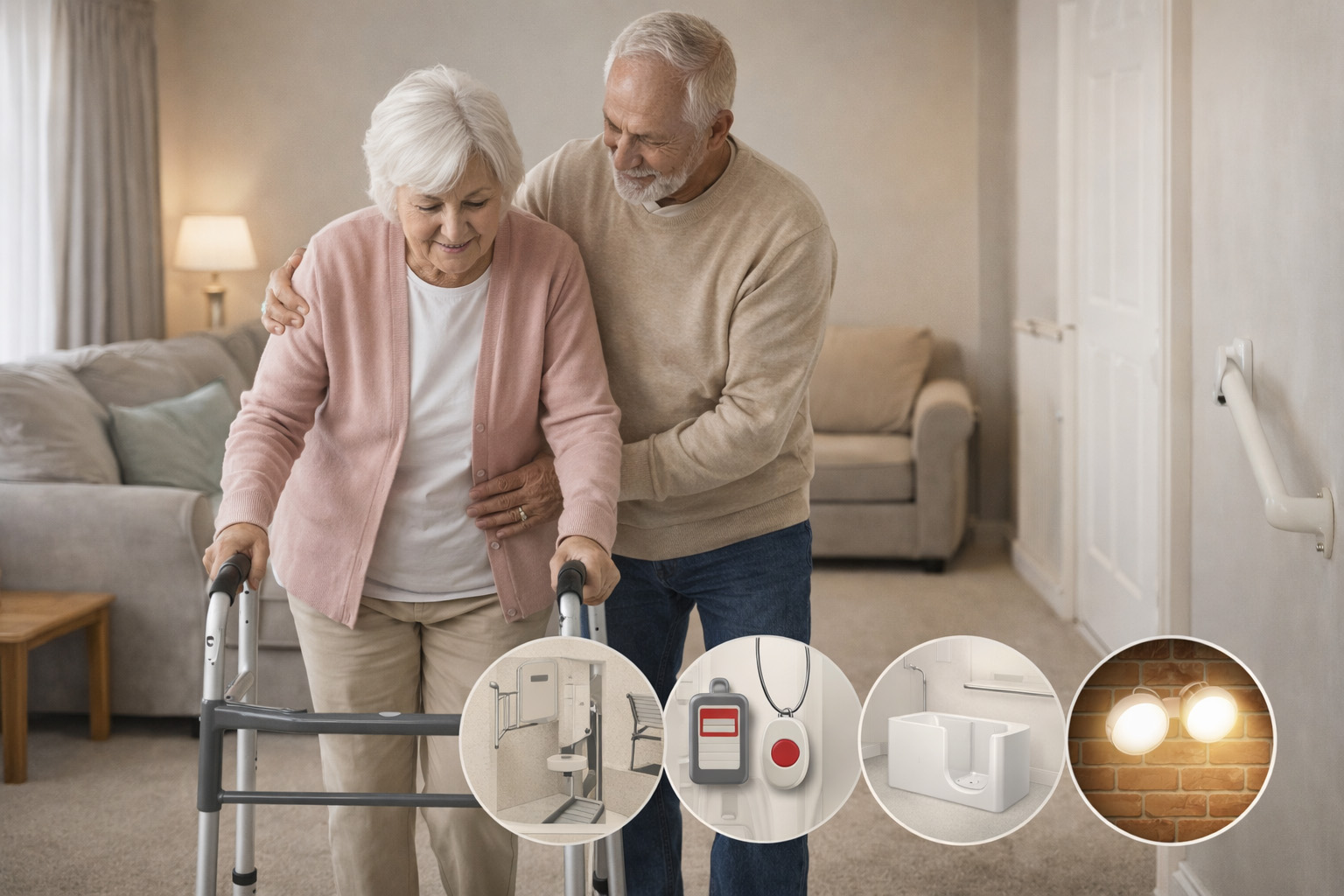
- Installing grab bars near toilets and showers
- Using non-slip mats
- Adding walk-in showers
- Improving lighting
These changes significantly reduce the risk of slips and falls.
2. Improved Lighting
Poor lighting can lead to accidents, especially at night.
Consider:
- Bright LED lighting in all rooms
- Motion-sensor lights in hallways
- Night lights in bedrooms and bathrooms
Good visibility is essential for safe movement.
3. Stair and Entry Safety
Stairs and entrances should be easy to navigate.
Upgrades may include:
- Handrails on both sides of stairs
- Non-slip stair surfaces
- Ramps for wheelchair or walker access
- Secure railings at entry points
4. Flooring Adjustments
Uneven or slippery flooring can be dangerous.
Safer options include:
- Non-slip flooring materials
- Removing loose rugs
- Securing carpets properly
5. Kitchen Accessibility
The kitchen should be easy to use without strain.
Improvements may include:
- Lowered countertops
- Easy-to-reach cabinets
- Lever-style handles
- Safe appliance placement
The Role of Professional Installation
While some adjustments may seem simple, proper installation is critical for safety. Features like grab bars and railings must be securely fitted to support weight and prevent accidents.
Hiring professionals ensures:
- Correct placement
- Strong and secure installation
- Compliance with safety standards
Emotional and Lifestyle Benefits
Aging in place is not only about safety—it also supports emotional well-being. Staying in a familiar environment helps seniors maintain their routines, independence, and sense of control.
It also allows families to stay closely connected while ensuring their loved ones are safe.
When to Start Planning
It’s best to plan for aging in place before safety becomes a concern. Early preparation allows for smoother transitions and avoids emergency modifications later.
Conclusion
Aging in place is a practical and empowering choice for many seniors. By making thoughtful home modifications, you can create a safe, comfortable, and accessible living environment that supports independence and peace of mind.
Taking proactive steps today can make a significant difference in ensuring long-term safety and quality of life.